Highly innovative social enterprise
Harz-Weser-Werke is one of the largest providers of assistance services for people with disabilities in southern Lower Saxony. At 30 locations, more than 900 employees work to ensure that people with disabilities can live, work and go about their lives on their own terms.
As a major employer in the region between the Harz mountains and the Weser river, it takes on social responsibility in the districts of Göttingen, Northeim and Holzminden.

“Thanks to the system’s intuitive operation, people with disabilities can be integrated into production processes more easily and more quickly.”
Christian Bierschenk Head of Work & Education
The challenge
Harz-Weser-Werke faces the challenge of further improving support for people with disabilities. The existing processes for working with industrial customers are complex and can be optimized to remove barriers. In addition, new employees need to be onboarded in a more targeted way and more quickly, to make their integration easier and to meet growing demands.
The solution
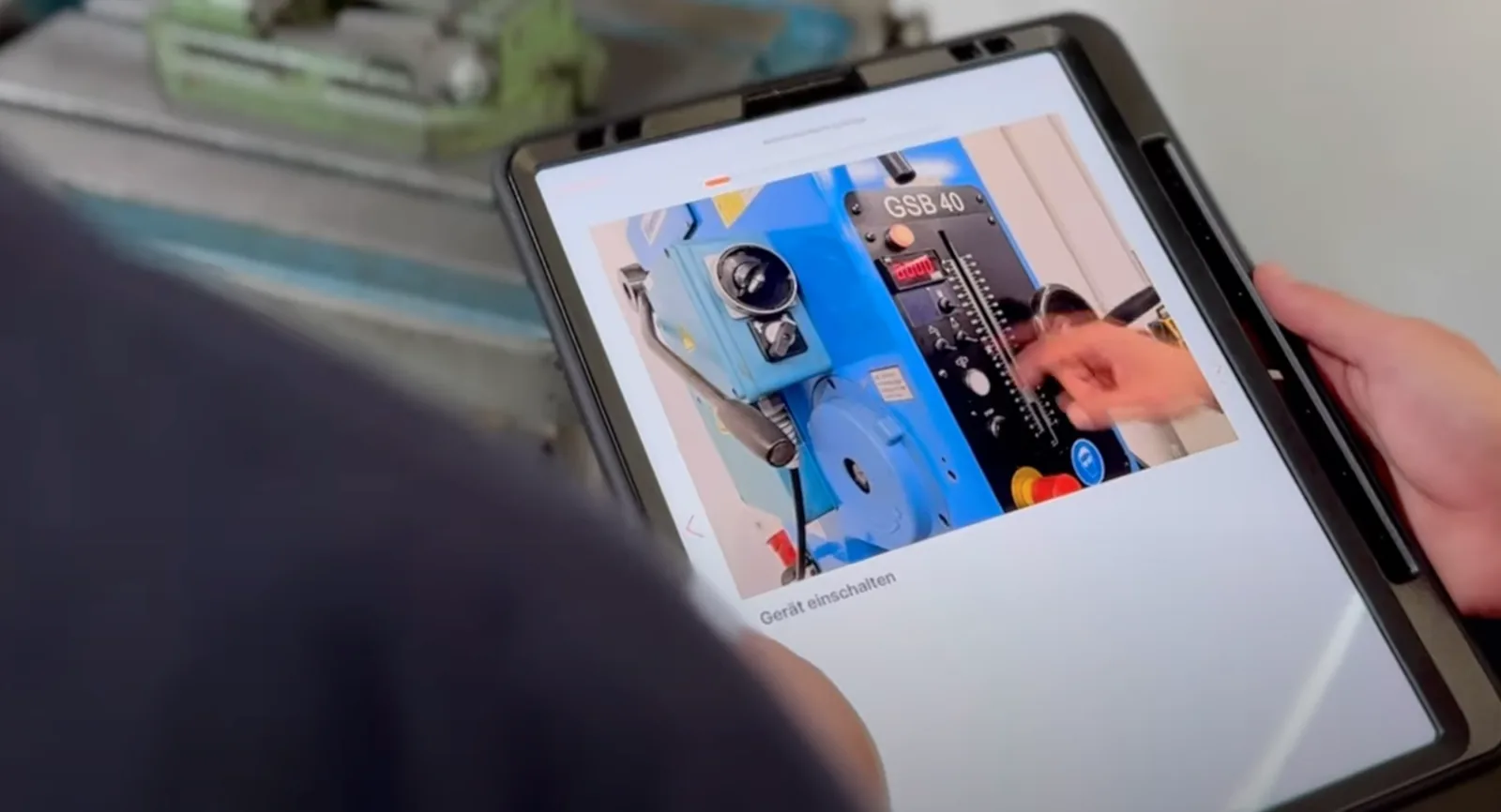
To meet this challenge, a digital assistance system with a modular structure is used. A central platform for tasks and inductions makes access easier and speeds up work processes.
The benefits at a glance
Flexible adaptation
A modular structure makes it easy to adapt to the requirements of different industries such as steel and plant construction, vehicle manufacturing and electrical engineering.
Better provision of information
Up-to-date tasks and inductions are available on a central platform, which makes the work process more efficient.
More benefits
- Flexible assistance solution: A mobile app and a digital workbench with a projector support different production processes.
- Step-by-step guidance: Video sequences break complex work processes down into simple steps that especially help people with disabilities carry out processes independently.
- Accessible controls: External interaction devices allow the system to be operated efficiently and accessibly.
Results & conclusion
Conclusion: Step-by-step guidance increases efficiency and makes fast onboarding easier, especially for employees with disabilities. It fosters independence and improves collaboration with industrial customers through clear, accessible tasks.
Similar challenges in your workshop?
Find out how digital assistance software can optimize your production processes too.
Book a demo