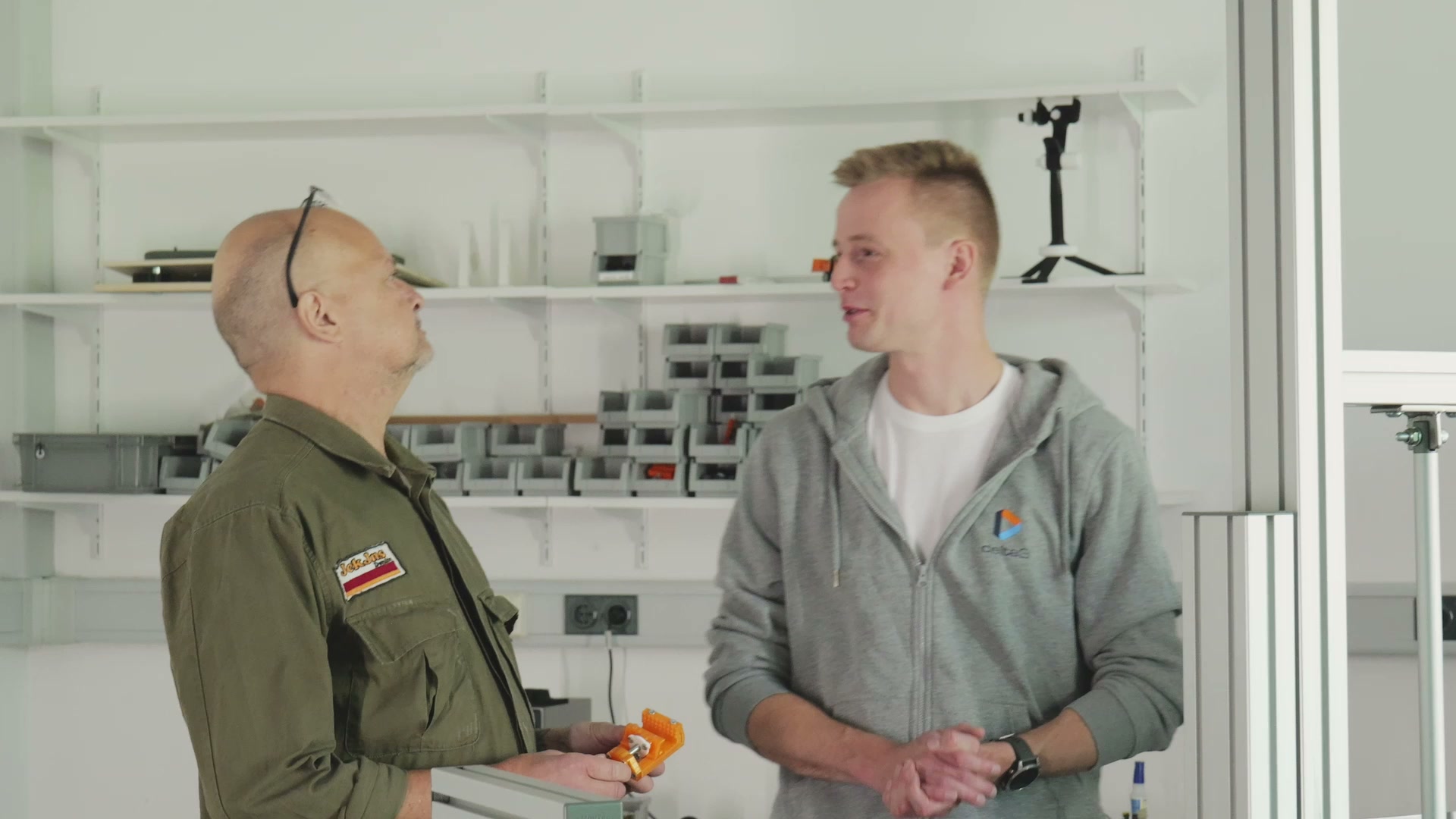
Vocational training through practice
The vocational training department at wertkreis Gütersloh offers specialized training programs for people with disabilities that are based on recognized training occupations and specifically foster the participants’ strengths.
To keep improving its training and qualification programs, wertkreis Gütersloh works closely with a wide range of training providers and companies in the region. The qualification process is individually tailored and involves up to two years of intensive guidance, advice and support.

“Digital assistance systems are very important to us because they enable people to learn and develop new competencies and skills. Especially in the transition to the open labor market, digital assistance systems can provide individual, person-centered support.”
Anja Große-Cossmann Head of Vocational Training
The challenge
At wertkreis Gütersloh, the challenge is to integrate an assistance system that is individually tailored to the different needs of people and companies. This system has to be flexible enough to adapt quickly to changing situations, while also being cost-effective and accessible, so that it can be widely used and easily integrated into existing processes.
The solution
To meet these challenges, an adaptive assistance system was implemented that can be applied easily and quickly to the needs of people with support needs.
The benefits at a glance
Individually adaptable
The assistance system can be flexibly adapted to specific requirements and needs to ensure the best possible support in everyday work.
Modularity
Its modular design makes it possible to expand or adapt the system to keep pace with the changing demands of the work environment.
Gaming factor
The system’s visual, playful approach encourages user engagement by presenting complex processes in a simplified and appealing way.
Results & conclusion
Results achieved
- New areas of work: The system enables people to carry out work processes that would otherwise not have been possible for them.
- Accessibility: Designing instruction in a playful way fosters independence and achieves greater acceptance than conventional methods.
- Contributing their own expertise: The system creates a new field of work, programming tasks, in which users can contribute their own expertise.
Conclusion: Especially at a time of labor shortages, the assistance system can integrate people with impairments into the labor market, above all thanks to its visual components and language independence. This also gives people who do not speak German, or do not yet speak it, fast and straightforward integration into the labor market.
Want to digitalize vocational training?
Find out how digital assistance software can improve your training programs too.
Book a demo